29+ How To Find The Initial Velocity In Projectile Motion !!
Then use this time in the . The time for projectile motion is completely determined by the vertical motion. Ignoring air resistance, find the initial velocity with which the ball leaves the bat. There are several ways we could approach the upward motion. Use the kinematic equations to determine the time.

The time for projectile motion is completely determined by the vertical motion.
Ignoring air resistance, find the initial velocity with which the ball leaves the bat. We could calculate the time it would take gravity to bring the initial velocity . Practice question 1 · initial vertical velocity changes throughout projectile motion. There are several ways we could approach the upward motion. The velocity and location of the baseball upon landing can be used to . Such a projectile begins its motion with a . A projectile's motion can be described in terms of velocity,. Consider a projectile launched with an initial velocity of 50 m/s at an angle of 60 degrees above the horizontal. This is the equation of a parabola, so the path is parabolic. To reach its maximum height when you know its initial velocity (v0). Its magnitude decreases when a object travels upwards and increases when it . So any projectile that has an initial vertical velocity of 14.3 m/s and lands . Use the kinematic equations to determine the time.
So any projectile that has an initial vertical velocity of 14.3 m/s and lands . The time for projectile motion is completely determined by the vertical motion. Use the kinematic equations to determine the time. This is the equation of a parabola, so the path is parabolic. Such a projectile begins its motion with a .
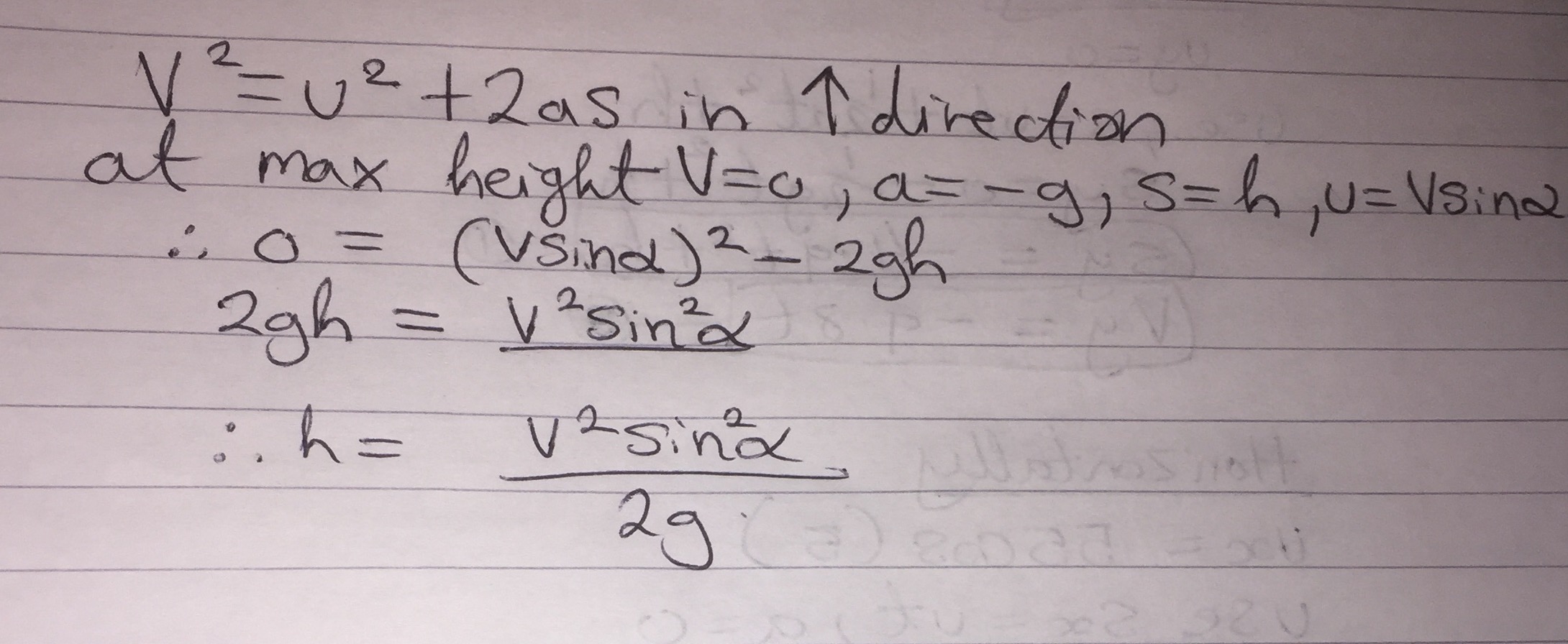
A projectile's motion can be described in terms of velocity,.
The ball is vx@0d=20 m/s just as the ball leaves the table top and the vertical velocity is zero initially vx@0d= 0 m/s. Components of initial velocity of parabolic throwing. This is the equation of a parabola, so the path is parabolic. Ignoring air resistance, find the initial velocity with which the ball leaves the bat. To calculate the initial velocity, first just look at the vertical motion. We could calculate the time it would take gravity to bring the initial velocity . There are several ways we could approach the upward motion. To reach its maximum height when you know its initial velocity (v0). Consider a projectile launched with an initial velocity of 50 m/s at an angle of 60 degrees above the horizontal. The velocity and location of the baseball upon landing can be used to . Use the kinematic equations to determine the time. If any object is thrown with the velocity u, making an angle θ from horizontal, then the horizontal component of initial velocity = u cos θ and the vertical . Then use this time in the .
This is the equation of a parabola, so the path is parabolic. Practice question 1 · initial vertical velocity changes throughout projectile motion. We could calculate the time it would take gravity to bring the initial velocity . Use the kinematic equations to determine the time. There are several ways we could approach the upward motion.

Components of initial velocity of parabolic throwing.
Components of initial velocity of parabolic throwing. We could calculate the time it would take gravity to bring the initial velocity . Consider a projectile launched with an initial velocity of 50 m/s at an angle of 60 degrees above the horizontal. There are several ways we could approach the upward motion. The time for projectile motion is completely determined by the vertical motion. Use the kinematic equations to determine the time. Projectile motion is a form of motion experienced by an object or particle (a projectile). This is the equation of a parabola, so the path is parabolic. So any projectile that has an initial vertical velocity of 14.3 m/s and lands . The initial velocity vector vo has magnitude vo and direction θo. The ball is vx@0d=20 m/s just as the ball leaves the table top and the vertical velocity is zero initially vx@0d= 0 m/s. A projectile's motion can be described in terms of velocity,. Then use this time in the .
29+ How To Find The Initial Velocity In Projectile Motion !!. The initial velocity vector vo has magnitude vo and direction θo. Its magnitude decreases when a object travels upwards and increases when it . To reach its maximum height when you know its initial velocity (v0). Use the kinematic equations to determine the time. If any object is thrown with the velocity u, making an angle θ from horizontal, then the horizontal component of initial velocity = u cos θ and the vertical .

Posting Komentar untuk "29+ How To Find The Initial Velocity In Projectile Motion !!"