14+ How To Find Initial Velocity With X And Y Components !!
The first thing that must be found to solve this problem is the initial velocity in the x and y directions. How do you find the velocity of an object if you are given the x and y components of the velocity? It makes the most sense to use the pythagorean theorem to find the magnitude then trig to find the angle, but i've got a classmate telling me you simply add together the x and y components. 23/10/2017 · finding velocity given x and y velocities. The initial velocity can be broken down using an equation relating the sine and cosine:
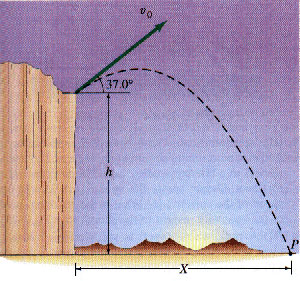
How do you find the velocity of an object if you are given the x and y components of the velocity?
How do you find the velocity of an object if you are given the x and y components of the velocity? For such an initial velocity, the object would initially be moving 19.6 m/s, upward and 73.1 m/s, rightward. 1 = cos 2 θ + sin 2 θ. 23/10/2017 · finding velocity given x and y velocities. The velocity that is given has both x and y components, because it is in a direction 60.0° up from the horizontal (x) direction. The initial velocity can be broken down using an equation relating the sine and cosine: It makes the most sense to use the pythagorean theorem to find the magnitude then trig to find the angle, but i've got a classmate telling me you simply add together the x and y components. The first thing that must be found to solve this problem is the initial velocity in the x and y directions. We multiply both sides by the initial velocity squared v o 2:
For such an initial velocity, the object would initially be moving 19.6 m/s, upward and 73.1 m/s, rightward. The first thing that must be found to solve this problem is the initial velocity in the x and y directions. How do you find the velocity of an object if you are given the x and y components of the velocity? The velocity that is given has both x and y components, because it is in a direction 60.0° up from the horizontal (x) direction. We multiply both sides by the initial velocity squared v o 2:

The initial velocity can be broken down using an equation relating the sine and cosine:
We multiply both sides by the initial velocity squared v o 2: The first thing that must be found to solve this problem is the initial velocity in the x and y directions. 1 = cos 2 θ + sin 2 θ. The velocity that is given has both x and y components, because it is in a direction 60.0° up from the horizontal (x) direction. The initial velocity can be broken down using an equation relating the sine and cosine: For such an initial velocity, the object would initially be moving 19.6 m/s, upward and 73.1 m/s, rightward. It makes the most sense to use the pythagorean theorem to find the magnitude then trig to find the angle, but i've got a classmate telling me you simply add together the x and y components. How do you find the velocity of an object if you are given the x and y components of the velocity? 23/10/2017 · finding velocity given x and y velocities.
The first thing that must be found to solve this problem is the initial velocity in the x and y directions. The velocity that is given has both x and y components, because it is in a direction 60.0° up from the horizontal (x) direction. How do you find the velocity of an object if you are given the x and y components of the velocity? 1 = cos 2 θ + sin 2 θ. We multiply both sides by the initial velocity squared v o 2:

It makes the most sense to use the pythagorean theorem to find the magnitude then trig to find the angle, but i've got a classmate telling me you simply add together the x and y components.
The first thing that must be found to solve this problem is the initial velocity in the x and y directions. It makes the most sense to use the pythagorean theorem to find the magnitude then trig to find the angle, but i've got a classmate telling me you simply add together the x and y components. 1 = cos 2 θ + sin 2 θ. For such an initial velocity, the object would initially be moving 19.6 m/s, upward and 73.1 m/s, rightward. The velocity that is given has both x and y components, because it is in a direction 60.0° up from the horizontal (x) direction. We multiply both sides by the initial velocity squared v o 2: The initial velocity can be broken down using an equation relating the sine and cosine: How do you find the velocity of an object if you are given the x and y components of the velocity? 23/10/2017 · finding velocity given x and y velocities.
14+ How To Find Initial Velocity With X And Y Components !!. How do you find the velocity of an object if you are given the x and y components of the velocity? It makes the most sense to use the pythagorean theorem to find the magnitude then trig to find the angle, but i've got a classmate telling me you simply add together the x and y components. We multiply both sides by the initial velocity squared v o 2: The first thing that must be found to solve this problem is the initial velocity in the x and y directions. 1 = cos 2 θ + sin 2 θ.

Posting Komentar untuk "14+ How To Find Initial Velocity With X And Y Components !!"