47+ How To Find Initial Velocity In Acceleration !!
Subtract the initial velocity from the final velocity, then divide the result by the time interval. 13/07/2020 · use the formula to find acceleration. They are four initial velocity formulas: Some other things to keep in mind when using the acceleration equation: The final result is your average acceleration over that time.

The final result is your average acceleration over that time.
Subtract the initial velocity from the final velocity, then divide the result by the time interval. You need to subtract the initial velocity from the final velocity. The final result is your average acceleration over that time. Next, divide the distance by the time and write down that quotient as well. Then, divide that number by 2 and write down the quotient you get. 13/07/2020 · use the formula to find acceleration. (1) if time, acceleration and final velocity are provided, the initial velocity is articulated as. (2) if final velocity, acceleration, and distance are provided we make use of: 16/01/2021 · t ( f) − t ( i) in this acceleration equation, v ( f) is the final velocity while is the v ( i) initial velocity. They are four initial velocity formulas: 20/11/2019 · to find initial velocity, start by multiplying the acceleration by the time. T ( f) is the final time and t ( i) is the initial time. Some other things to keep in mind when using the acceleration equation:
(1) if time, acceleration and final velocity are provided, the initial velocity is articulated as. Some other things to keep in mind when using the acceleration equation: 13/07/2020 · use the formula to find acceleration. Subtract the initial velocity from the final velocity, then divide the result by the time interval. The final result is your average acceleration over that time.

16/01/2021 · t ( f) − t ( i) in this acceleration equation, v ( f) is the final velocity while is the v ( i) initial velocity.
Then, divide that number by 2 and write down the quotient you get. Subtract the initial velocity from the final velocity, then divide the result by the time interval. You need to subtract the initial velocity from the final velocity. (2) if final velocity, acceleration, and distance are provided we make use of: 13/07/2020 · use the formula to find acceleration. The final result is your average acceleration over that time. Some other things to keep in mind when using the acceleration equation: T ( f) is the final time and t ( i) is the initial time. It is the velocity at which the motion starts. 16/01/2021 · t ( f) − t ( i) in this acceleration equation, v ( f) is the final velocity while is the v ( i) initial velocity. (1) if time, acceleration and final velocity are provided, the initial velocity is articulated as. 20/11/2019 · to find initial velocity, start by multiplying the acceleration by the time. They are four initial velocity formulas:
Subtract the initial velocity from the final velocity, then divide the result by the time interval. T ( f) is the final time and t ( i) is the initial time. Then, divide that number by 2 and write down the quotient you get. The final result is your average acceleration over that time. (1) if time, acceleration and final velocity are provided, the initial velocity is articulated as.
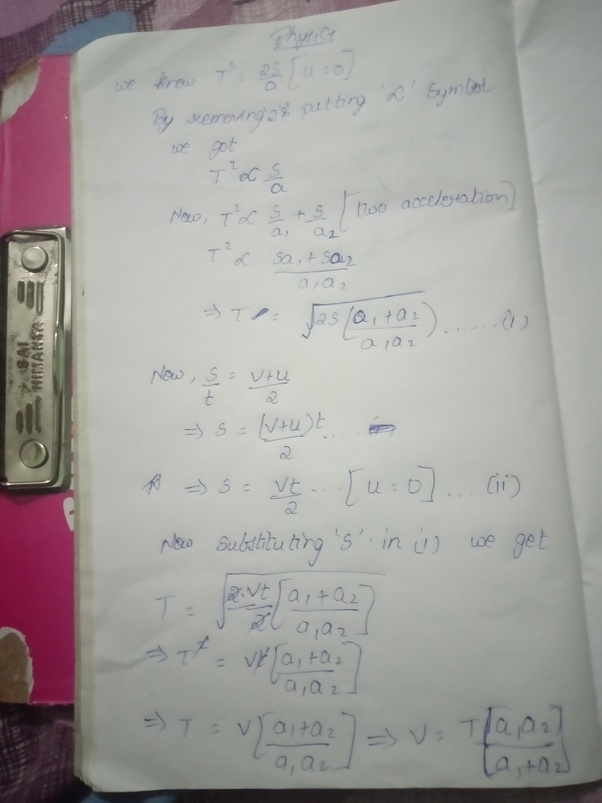
16/01/2021 · t ( f) − t ( i) in this acceleration equation, v ( f) is the final velocity while is the v ( i) initial velocity.
(1) if time, acceleration and final velocity are provided, the initial velocity is articulated as. Next, divide the distance by the time and write down that quotient as well. 16/01/2021 · t ( f) − t ( i) in this acceleration equation, v ( f) is the final velocity while is the v ( i) initial velocity. Some other things to keep in mind when using the acceleration equation: (2) if final velocity, acceleration, and distance are provided we make use of: 13/07/2020 · use the formula to find acceleration. 20/11/2019 · to find initial velocity, start by multiplying the acceleration by the time. Then, divide that number by 2 and write down the quotient you get. The final result is your average acceleration over that time. Subtract the initial velocity from the final velocity, then divide the result by the time interval. They are four initial velocity formulas: It is the velocity at which the motion starts. T ( f) is the final time and t ( i) is the initial time.
47+ How To Find Initial Velocity In Acceleration !!. Subtract the initial velocity from the final velocity, then divide the result by the time interval. You need to subtract the initial velocity from the final velocity. T ( f) is the final time and t ( i) is the initial time. Then, divide that number by 2 and write down the quotient you get. (1) if time, acceleration and final velocity are provided, the initial velocity is articulated as.

Posting Komentar untuk "47+ How To Find Initial Velocity In Acceleration !!"